How to Avoid Etching Concrete When Using Heavy Jet Cleaners
High-pressure jet cleaning is one of the most effective methods for revitalising driveways, paths, and entertaining spaces across Adelaide. However, the sheer power of commercial-grade pressure equipment carries a major risk: concrete etching. Etching occurs when the concentrated force of a water stream gouges into the surface paste of the concrete, leaving permanent lines, swirl marks, or exposed aggregate. In Adelaide's climate, where concrete already contends with high UV exposure, dry https://adelaidepressurecleaningpros.com.au summer dust, and seasonal ground movement from reactive clay soils, damaged concrete can degrade rapidly if breached by careless high-pressure cleaning.
Understanding Why Concrete Etches
Concrete may appear indestructible, but standard cured concrete is protected by a thin, cement-rich outer layer known as the cream. When water pressure exceeds the compressive strength of this top layer, the blast strips away the smooth finish. In 2026, modern residential and commercial cleaning standards emphasize substrate preservation alongside deep cleaning. Operating equipment at excessive pressures—often over 3,000 PSI—without proper technique is the leading cause of irreversible surface damage.
Essential Guidelines to Prevent Surface Gouging
Protecting Adelaide driveways and outdoor slabs requires the right balance of water volume, mechanical pressure, and operator technique. Implementing systematic precautions ensures you extract stubborn oil and mould without carving permanent lines into the slab.
- Select the Right Spray Pattern: Never use a red zero-degree "pencil jet" nozzle on decorative or standard concrete. Instead, equip a 25-degree (green) or 40-degree (white) fan nozzle to distribute the force evenly over a broader strike zone.
- Maintain a Consistent Distance: Keep the wand tip at a steady distance of at least 300 millimetres from the surface. Bringing the nozzle too close concentrates the kinetic force into a destructive cutting stream.
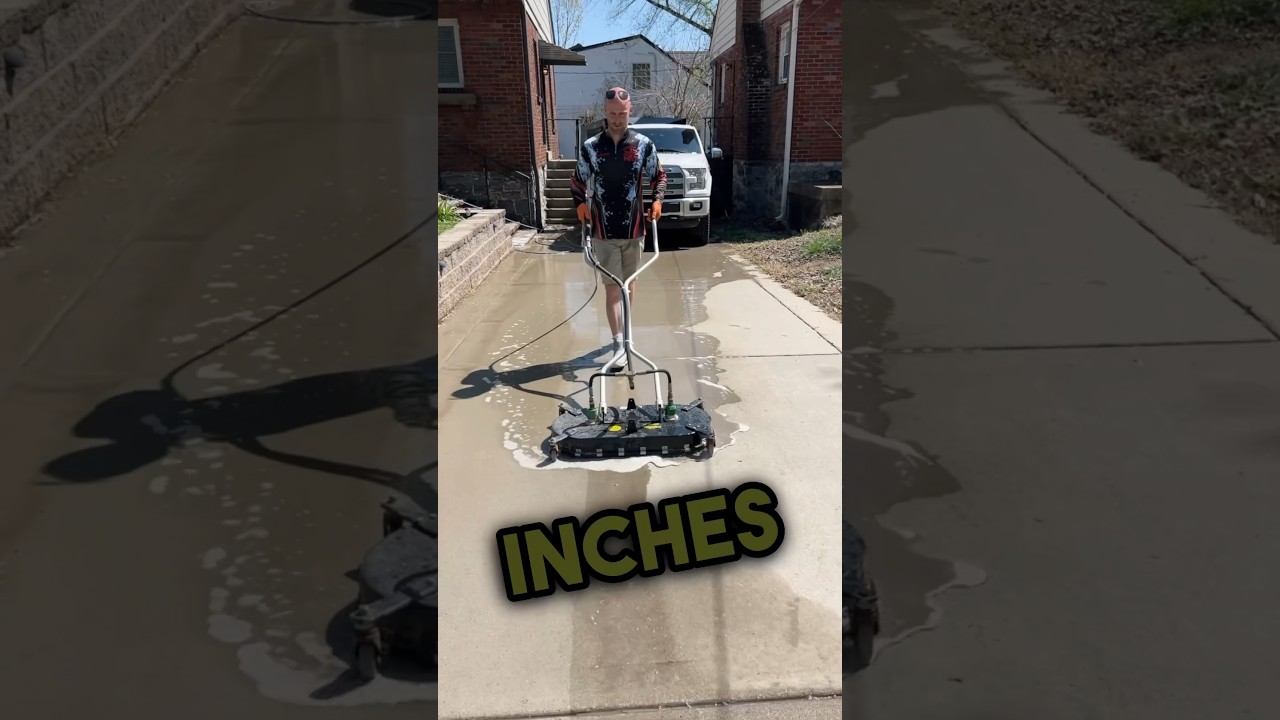
- Utilise a Flat Surface Cleaner: For large flat work such as driveways in suburbs from Norwood to Glenelg, invest in or hire a dual-rotor surface cleaner. These units balance the spray bars inside an enclosed housing, ensuring an even, uniform distance from the concrete and eliminating zebra-striping.
- Conduct a Test Patch First: Always evaluate the concrete's tolerance in an inconspicuous area, such as behind an outdoor unit or near a garden bed, adjusting your throttle and distance before tackling central traffic areas.
The Soft Wash and Pre-Treatment Alternative
Relying solely on brute force to dislodge deep-set grime, bore water stains, or moss increases the likelihood of gouging the slab. Professional exterior cleaners across South Australia rely on pre-treatment chemistry to break surface tension prior to washing. Applying an eco-friendly, alkaline or surfactant-based cleaning detergent breaks down vehicle grease and organic algae at a molecular level.
Once the chemical solution loosens the contaminants, you can dial down the jet cleaner to a safe pressure—typically between 1,500 and 2,200 PSI—and rely on high water flow (measured in litres per minute) rather than sheer pressure to rinse the dirt away. This method provides a noticeably cleaner result while keeping the concrete surface intact.
Common Concrete Finishes and Their Pressure Limits
Different concrete surfaces around Adelaide properties require tailored approaches to prevent surface failure:

- Exposed Aggregate: Highly resilient, but excessive pressure can dislodge the decorative pebbles from the resin or cement base. Limit pressure and sweep continuously.
- Stencilled or Coloured Concrete: The coloured top layer is vulnerable to peeling under concentrated blast pressures. Use lower pressure combined with a dedicated cleaning solution.
- Honed or Smooth-Trowelled Concrete: Readily showcases wand marks and micro-gouges. These surfaces should always be cleaned using rotary surface cleaners rather than open-lance lances.
Long-Term Concrete Protection for Adelaide Homes
Once concrete is etched, smoothing the gouges requires costly mechanical grinding or resurfacing overlays. Taking a preventative, technique-focused approach protects the structural integrity and aesthetic value of your property. For heavily stained surfaces or delicate decorative coatings, hiring an insured, local Adelaide high-pressure cleaning specialist guarantees pristine results without the risk of permanent property damage.

Adelaide Pressure Cleaning Pros
70 Overland Rd, Croydon Park SA 5008
(08) 7228 0262
Ends · FINNMVXB051